Projects which I developed with love

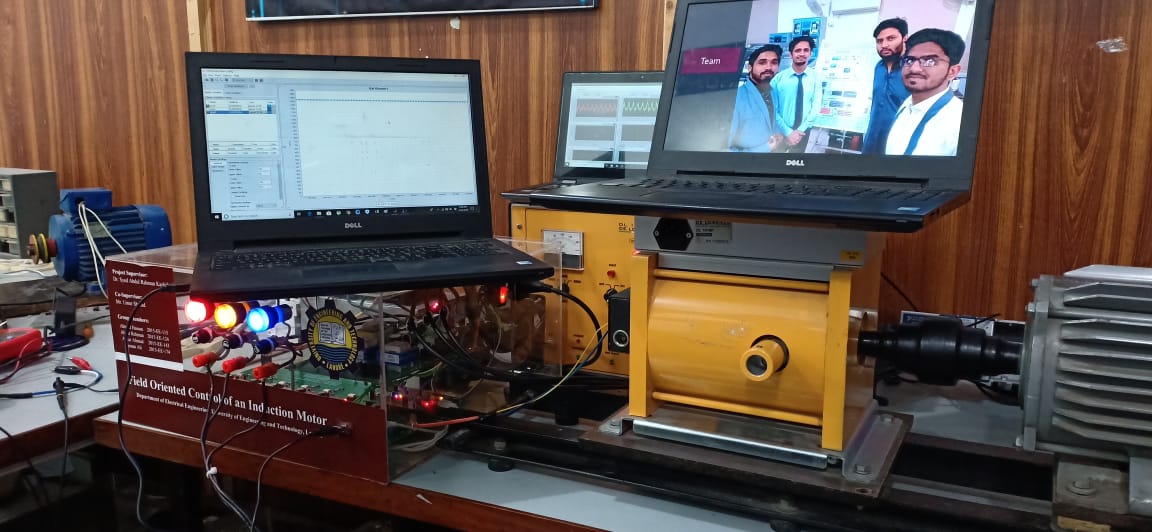
Field-Oriented Control (FOC) for Induction Motors
Top-Ranked Final Year Project: Innovative Vector Control with Clark Transformation
This project, which secured the top position at the UET Lahore Final Year Project Exhibition, focuses on developing a cost-effective motor drive solution for induction motors.
We successfully incorporated a vector control mechanism using Field-Oriented Control (FOC), which relies on the Clark transformation to achieve high-performance motor speed and torque control.
Our solution delivers an energy-efficient and highly responsive motor drive, showcasing advanced skills in power electronics, embedded systems, and control theory.

Robotic Arm Development & Control
Academic Project for Robotics at UET Lahore
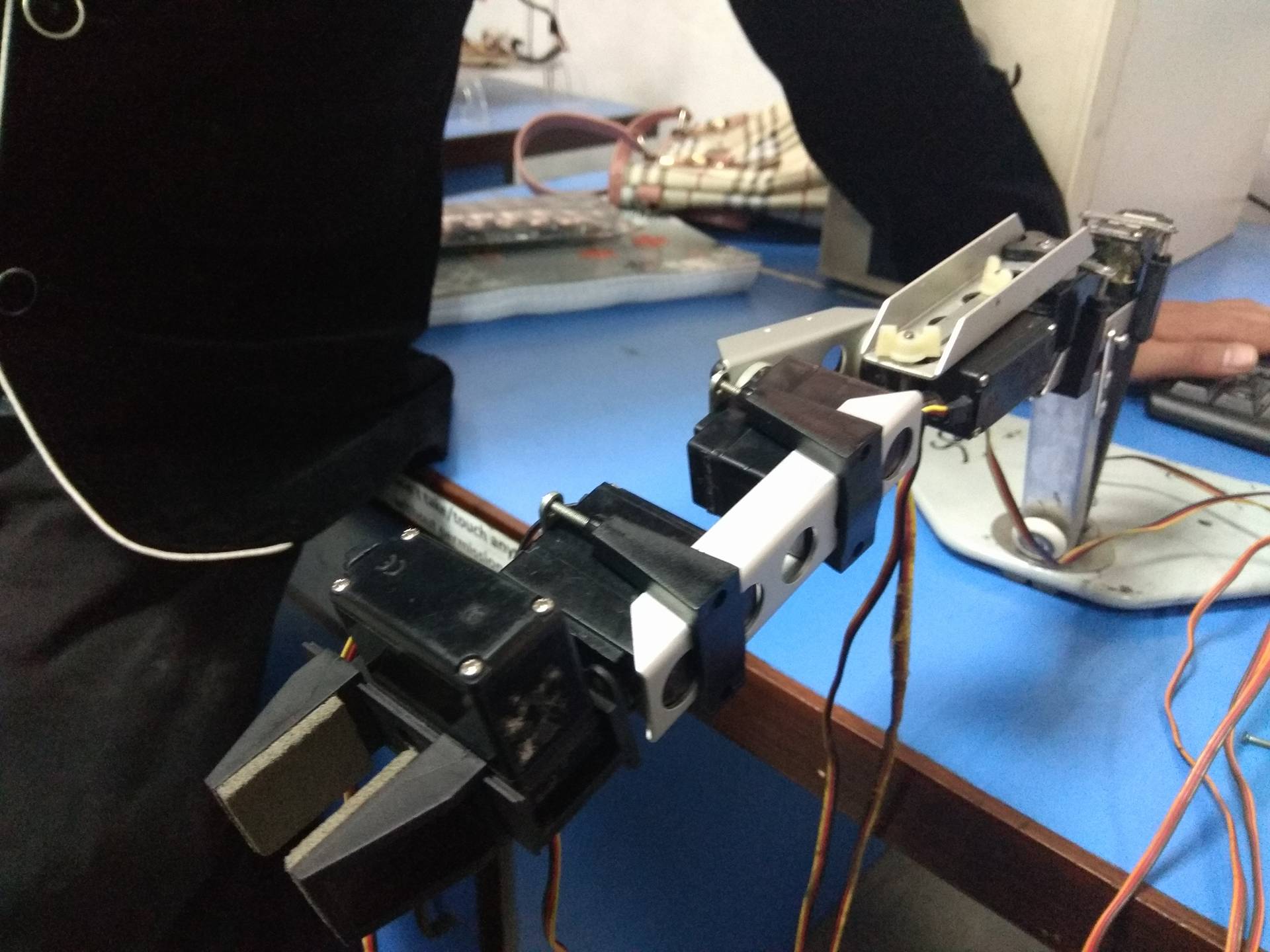
- This project involved the design and construction of a multi-degree-of-freedom robotic arm as part of the university’s Robotics curriculum.
- The work included the implementation of both hardware and software, focusing on kinematics and the control systems necessary for precise movement.
- This project highlights practical skills in mechanical design, mechatronics, and the programming of robotic systems for specific tasks.

Two-Wheel Self-Balancing Robot
Semester Project utilizing an STM32 Microcontroller
- This project focused on the development of a two-wheel self-balancing robot, a classic challenge in robotics that combines mechanical design with advanced control theory. Using an STM32 microcontroller, we implemented an intricate control system to maintain the robot’s upright position. This included sensor fusion from an Inertial Measurement Unit (IMU) and a Proportional-Integral-Derivative (PID) controller to manage motor speed and direction. The project highlights a strong foundation in embedded systems programming, sensor data processing, and the practical application of control algorithms.

Dual-Range DC Voltage Supply
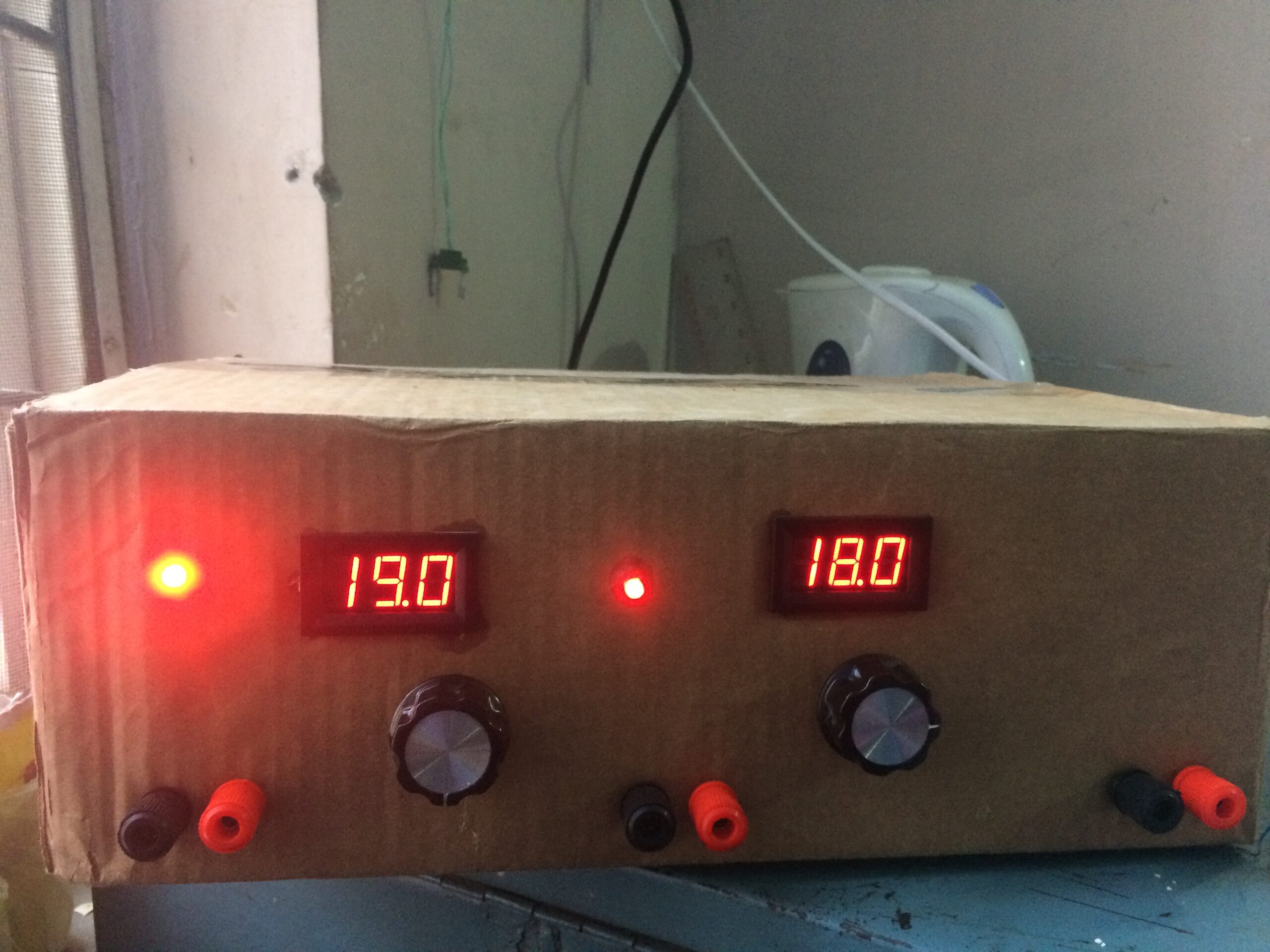
This project involved the design and construction of a DC voltage power supply with a dual-range output and a dedicated 5VDC rail. This hands-on project demonstrates a practical understanding of fundamental electronics principles and circuit design.
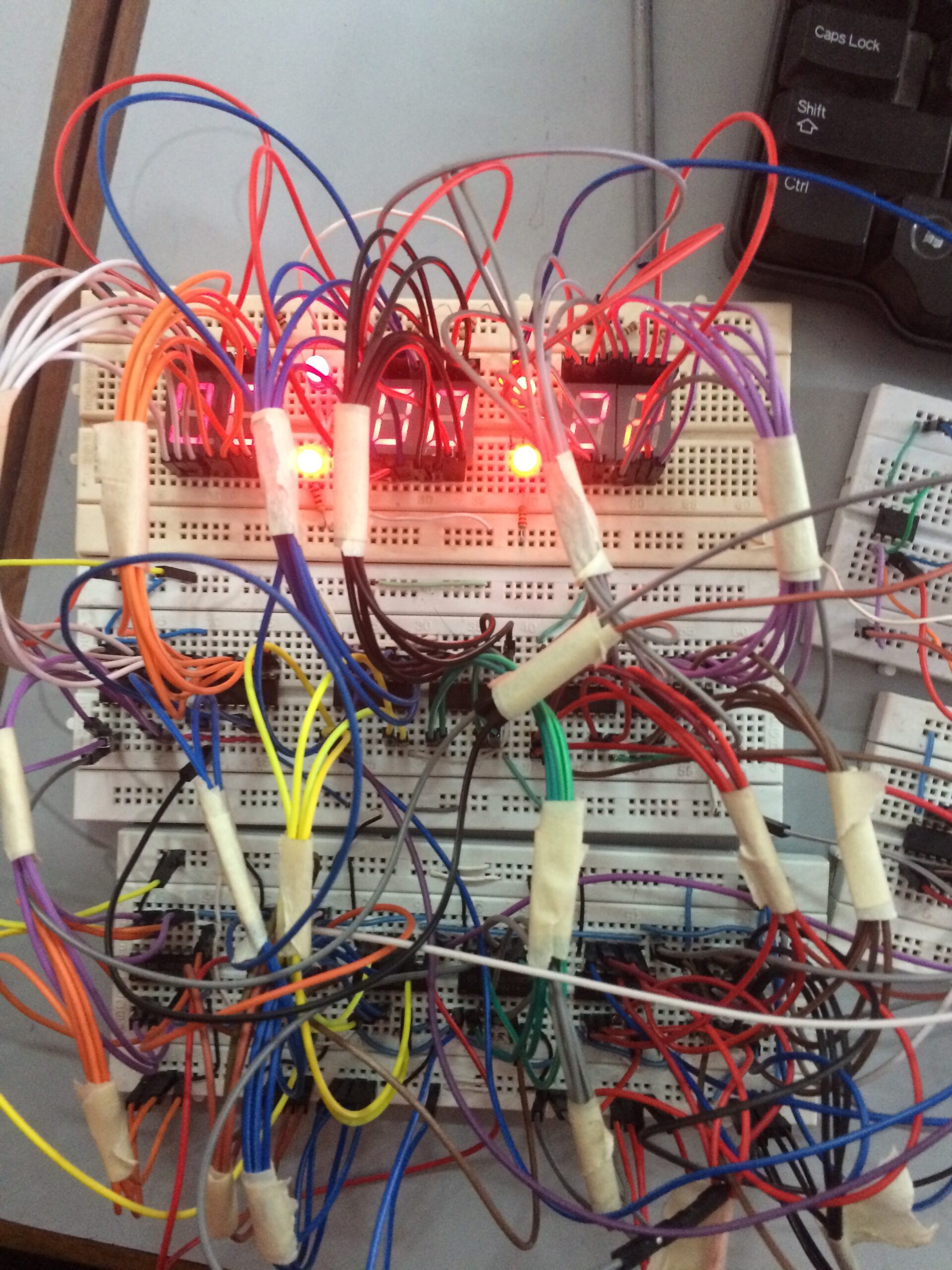
The power supply features an adjustable output from 0-30VDC, allowing for flexible use in various electronic testing and prototyping scenarios.
A separate, dedicated 5VDC output was included to provide a stable power source for common digital logic circuits and microcontrollers, such as the STM32 used in other projects.

Digital Time Clock on Breadboard
This project involved the construction of a digital time clock on a breadboard, using a series of counter microchips and a self-built RC clock circuit as the timing source. This hands-on project demonstrates a fundamental understanding of digital electronics and circuit design.
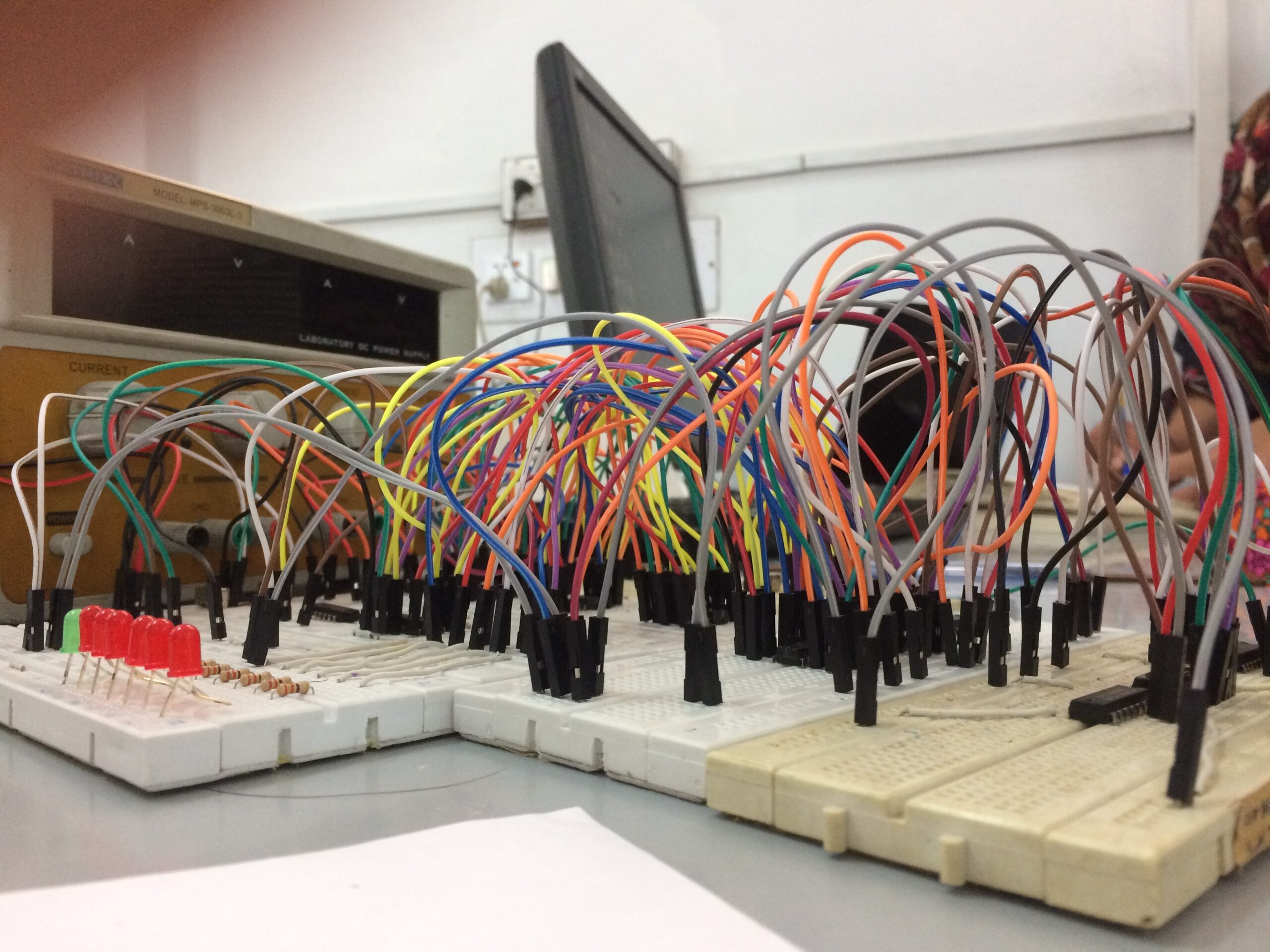
The clock’s core functionality relies on counter microchips to track and display hours, minutes, and seconds, which are driven by a custom-built RC (Resistor-Capacitor) oscillator.
By building the RC clock from scratch, this project highlights a deeper grasp of timing principles and the ability to design and implement basic clock pulses without relying on pre-built crystal oscillators.

4-Bit ALU on Breadboard
This project involved the design and implementation of a 4-bit Arithmetic Logic Unit (ALU) on a breadboard using digital logic gates and multiplexers. The ALU is a fundamental component of a CPU and is responsible for performing arithmetic and logical operations on binary numbers.
This hands-on project demonstrates a solid understanding of digital logic design, including the use of combinational circuits to perform operations like addition, subtraction, AND, and OR.
By building the ALU from individual chips, the project showcases the ability to translate theoretical digital logic concepts into a fully functional hardware circuit.